
Here is an unglamorous truth that took the fitness world far too long to accept: you do not get fitter during the workout. You get fitter afterwards, while you recover from it. The session is the stress. The adaptation, the actual getting stronger, happens in the hours and days that follow, in your sleep, your food and your downtime. Which means recovery is not the opposite of training. It is part of it.
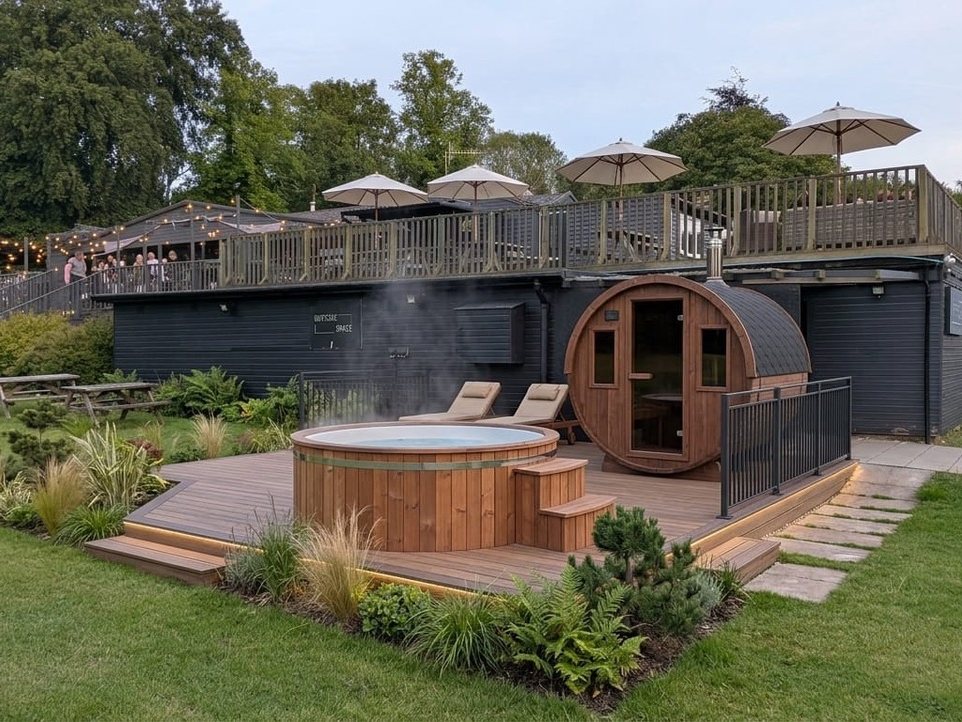
That idea shaped a whole corner of Magnolia Park: a sauna, a hot tub and a terrace built for slowing down. Here is a simple, no nonsense guide to using it well.
Heat: the easiest win
A sauna feels good, and it turns out feeling good is doing something. Regular sauna use is associated with better cardiovascular health, and in the short term it helps you relax, unwind tight muscles and sleep better that night. There is no complicated protocol required. Ten to twenty minutes, come out when you have had enough, hydrate, repeat if you fancy it.
The bigger benefit is often mental. A sauna is one of the few places left with no screen, no notifications and nothing to do but sit. That enforced stillness is worth as much as the heat.
Recovery is not a reward you earn after the real work. Done properly, it is the real work finishing its job.
Cold: less scary than it sounds
Cold exposure has become the headline act of the recovery world, and the hype has run a little ahead of the evidence. What we can say honestly is this: a short cold plunge leaves most people feeling sharp, clear headed and quietly pleased with themselves, and that mood lift is real and immediate. Start with thirty seconds to a minute. You do not need to suffer to benefit.
Alternating heat and cold, warm in the sauna, cool in the plunge, is an old and enjoyable ritual. Whether the science fully backs every claim made for it or not, the experience of it is genuinely restorative, and it is a lovely way to bookend a hard session.
The most underrated tool: doing nothing
Sauna and cold get the attention, but the humble part of recovery is just space. A terrace, a coffee, twenty minutes with your friends and no particular agenda. The nervous system needs time out of fight or flight to actually rebuild, and modern life is not generous with it. A club that gives you a genuinely nice place to linger is doing more for your recovery than another gadget ever will.
A simple way to use it
You do not need a spreadsheet. A pattern that works for most people: train, then take a gentle few minutes to come back down. Warm through in the sauna, cool off if you fancy it, drink some water, and sit for a while before you rush back into the day. Prioritise sleep that night and eat something proper. That is most of recovery, and none of it is complicated.
The point of building all this into Magnolia Park is not to turn recovery into another thing to optimise. It is to make the easy, enjoyable version of it a normal part of your week. Sit in the heat, cool off, breathe out, stay for a coffee. Your training will thank you, and so will the rest of your life.